
Picture this: you're crafting an essay on British social policy, and whilst your classmates quote the same handful of academic articles from Google Scholar, you reference a previously unpublished government white paper from the National Archives, complete with ministerial annotations. Your tutor pauses mid-marking, intrigued by a source they haven't encountered in student work before.
This scenario isn't fantasy—it's the competitive advantage that comes from exploring the remarkable research resources available through UK universities but overlooked by most students. Beyond the familiar databases lies a treasure trove of primary sources, specialist collections, and unique archives that can transform ordinary essays into exceptional academic work.
Why Unique Sources Matter in UK Higher Education
UK university marking schemes consistently reward originality, critical thinking, and evidence of independent research. When every student in your seminar quotes the same three journal articles, standing out becomes increasingly challenging. Unique sources don't just demonstrate research initiative—they provide fresh perspectives that can illuminate new aspects of familiar topics.
Moreover, engaging with diverse source types develops crucial academic skills:
- Critical evaluation of different forms of evidence
- Understanding how knowledge is constructed and disseminated
- Appreciation for the complexity of historical and contemporary issues
- Ability to synthesise information from multiple contexts
These competencies extend far beyond individual assignments, preparing you for postgraduate study and professional careers that demand sophisticated information literacy.
1. The British Library's Digital Collections: A Nation's Memory at Your Fingertips
The British Library's digital collections represent one of the world's most comprehensive repositories of British cultural and intellectual heritage. Through your university's subscription, you can access materials that would otherwise require expensive trips to London and lengthy application processes.
 Photo: British Library, via thomasguignard.photo
What You'll Find: Medieval manuscripts, historical newspapers dating back centuries, sound recordings of famous speeches, early printed books, and extensive collections of maps, photographs, and ephemera.
Academic Applications: History students can access contemporary newspaper coverage of historical events, providing insights into public opinion and media representation. Literature students can examine original manuscript drafts, revealing authors' creative processes. Politics students can trace policy debates through historical parliamentary papers and contemporary commentary.
Navigation Tips: Use the advanced search function to filter by date, format, and subject. The "Discovering Literature" section provides curated collections organised by period and theme, offering excellent starting points for essay research.
Essay Integration Strategy: Don't simply quote these sources—analyse them as historical artifacts that reveal contemporary attitudes, assumptions, and concerns. A 1930s newspaper editorial about unemployment provides different insights than modern historical analysis of the same period.
2. Hansard: The Complete Record of Parliamentary Democracy
Hansard provides verbatim transcripts of all UK parliamentary proceedings since 1803, offering unparalleled access to political discourse and decision-making processes. This resource proves invaluable across multiple disciplines, not merely politics and history.
What You'll Find: Complete transcripts of House of Commons and House of Lords debates, Prime Minister's Questions, committee hearings, and written parliamentary questions with ministerial responses.
 Photo: House of Commons, via c8.alamy.com
Academic Applications: Politics essays gain authenticity when quoting actual ministerial statements rather than secondary interpretations. Law students can trace legislative intent through parliamentary debates. Sociology students can analyse how social issues have been framed in political discourse over time.
Research Strategies: Use the advanced search to locate debates on specific topics or legislation. Pay attention to the evolution of arguments over time—how did political rhetoric around immigration, education, or healthcare change across decades?
Critical Analysis Opportunities: Examine not just what was said, but who spoke, when, and in what context. Parliamentary debates reveal political priorities, party positions, and the influence of contemporary events on policy-making.
3. JSTOR's Discipline-Specific Archives: Beyond the Obvious
Whilst most students know JSTOR exists, few explore its specialist collections that extend far beyond traditional academic journals. These archives contain unique materials that can provide distinctive perspectives for essays across various subjects.
Hidden Gems: The Artstor Digital Library contains millions of images for art history and cultural studies. The Global Plants database offers botanical illustrations and scientific documentation. The Prison Studies collection provides primary sources on criminal justice and penal reform.
Strategic Usage: Don't limit yourself to your immediate discipline. Psychology students writing about historical approaches to mental health can benefit from medical history archives. English literature students can explore contemporary scientific or political contexts through specialist collections.
Advanced Techniques: Use JSTOR's "Data for Research" service to analyse trends across large collections of texts. This computational approach can reveal patterns invisible through traditional reading methods.
4. Government White Papers and Policy Documents: The Machinery of Power
UK government departments regularly publish detailed policy papers, consultation documents, and research reports that receive limited academic attention despite their significance for understanding contemporary issues.
Where to Access: GOV.UK provides current and recent publications, whilst the Parliamentary Papers database (available through most university libraries) contains historical policy documents dating back centuries.
Academic Value: These sources reveal policy intentions, evidence bases, and decision-making processes that shape society. They're particularly valuable for essays addressing contemporary issues or policy effectiveness.
Analysis Approaches: Compare policy intentions with implementation outcomes. Examine how evidence is presented and interpreted. Consider what perspectives are included or excluded from policy development.
Interdisciplinary Applications: Education students can analyse curriculum reforms, sociology students can examine social policy development, and business students can explore regulatory frameworks.
5. Think Tank Publications: Independent Analysis and Policy Innovation
British think tanks produce substantial research that influences public policy and academic debate. These organisations offer perspectives that bridge academic scholarship and practical policy-making.
Key Institutions: The Institute for Fiscal Studies (economics and public finance), Chatham House (international affairs), the Resolution Foundation (living standards), and the Institute for Public Policy Research (social policy).
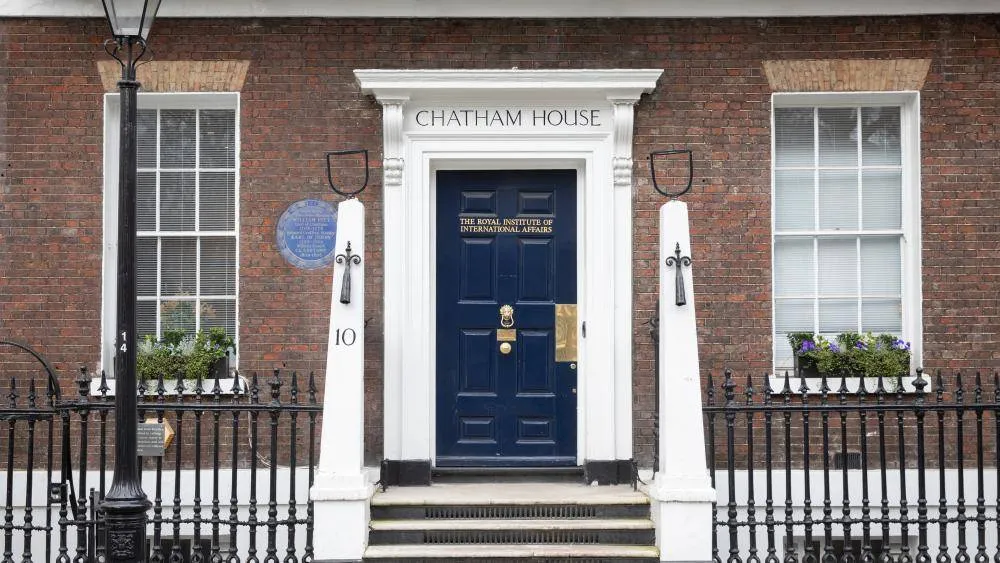 Photo: Chatham House, via www.chathamhouse.org
Research Quality: Many think tank publications undergo rigorous peer review and employ leading academics as researchers. They often provide more current analysis than traditional academic journals.
Essay Applications: Use think tank research to demonstrate awareness of contemporary debates and policy implications. Their reports often include original data analysis and policy recommendations that can enrich your arguments.
Critical Engagement: Always consider think tanks' political orientations and funding sources. Use their research as evidence whilst maintaining critical distance from their policy recommendations.
6. Specialist University Archives and Local Collections
Most UK universities maintain unique archives and special collections that reflect their institutional history, local context, and particular academic strengths. These collections often contain materials unavailable elsewhere.
Discovery Methods: Consult your university library's special collections webpage or contact subject librarians directly. Many institutions have digitised significant portions of their archives.
Research Opportunities: Business schools may hold company archives and entrepreneurial histories. Universities with strong social science departments often maintain community studies collections. Institutions with historical significance may possess unique political or cultural archives.
Local Context Advantages: Regional archives provide opportunities to examine national trends through local case studies, adding specificity and depth to broader arguments.
Access Strategies: Special collections often require advance booking and may have specific handling procedures. Plan research visits well in advance of essay deadlines.
7. Professional and Trade Publications: Real-World Perspectives
Professional journals, trade magazines, and industry publications offer perspectives often absent from academic literature. These sources provide insights into how theoretical concepts apply in practice and how practitioners understand their fields.
Examples: The Law Society Gazette for legal perspectives, The Lancet for medical viewpoints, Architectural Review for design analysis, and The Economist for business and economic analysis.
Academic Integration: Use professional publications to demonstrate understanding of practical applications and contemporary relevance. They're particularly valuable for essays addressing policy implementation or professional practice.
Critical Analysis: Professional publications may lack the theoretical sophistication of academic sources but offer practical insights and current awareness that enrich academic arguments.
Maximising Your Research Impact
Strategic Source Selection
Choose unique sources that genuinely enhance your argument rather than simply demonstrating research effort. Each source should contribute specific insights unavailable through conventional academic literature.
Integration Techniques
Avoid treating unusual sources as mere curiosities. Integrate them meaningfully into your analytical framework, using them to support, challenge, or complicate your central arguments.
Critical Evaluation
Apply the same critical standards to unique sources as to traditional academic materials. Consider authorship, purpose, audience, and potential bias when evaluating their reliability and relevance.
Balanced Approach
Unique sources should complement, not replace, solid academic scholarship. Aim for a research base that combines established academic sources with distinctive materials that add depth and originality.
By exploring these hidden academic treasures, you'll develop research skills that distinguish you from peers whilst discovering perspectives that can genuinely enhance your understanding of complex topics. The resources exist—the opportunity awaits your exploration.